Autonomous vehicles can improve safety and reduce crashes, congestion, and emissions. Such systems can swim or fly, as well as drive. But how does an autonomous vehicle decide what to do and how to do it? Through combining the expertises at Michigan of human-robot interaction, perception, and planning.
Michigan develops safe, robust systems that take into account all users of a transportation system, whether driver, pedestrian, or pilot. Researchers look at topics such as: how drivers build trust with an automated system; how such systems can detect pedestrians and avert any collisions; how vehicles can communicate their intentions with one another and infrastructure such as stoplights; and emergency flight planning can help reduce airplane crashes, or help distressed drones find flat rooftops in urban areas to make safe landings.
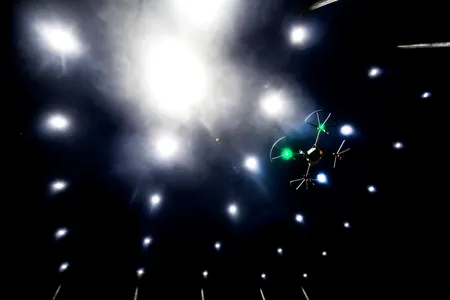
Researchers work on vehicles in the Ford Motor Company Robotics Building’s high bay garages, outfitting them with haptic steering wheels or improved LIDAR systems and event cameras, or in the three-story fly lab, where hexacopters are tracked with 12 motion capture cameras to help refine their flight.
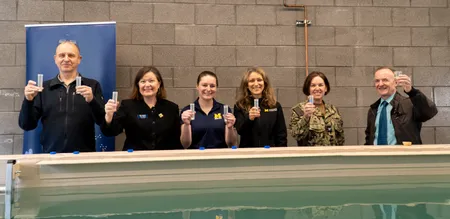
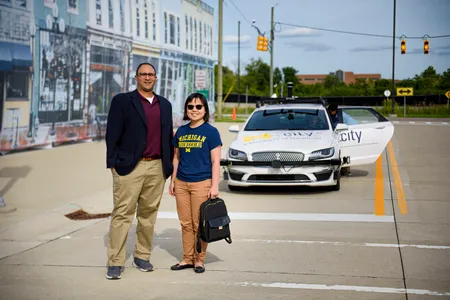
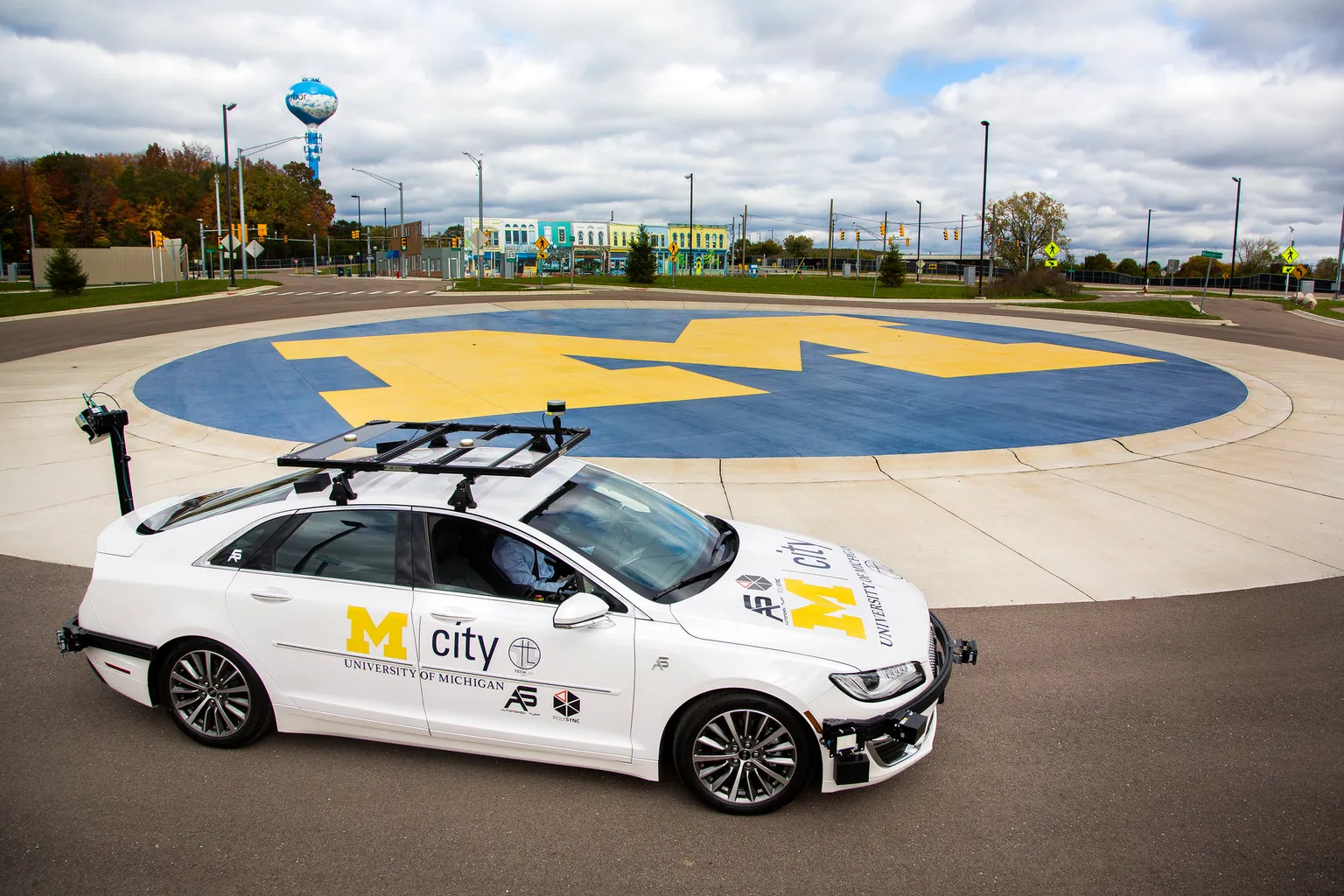
To test, cars only have a short trip over to Mcity, where a full scale town built for test drives allows the autonomous vehicles to try out roundabouts, railroad crossings, and freeways. Aerial vehicles can head out to M-Air Net, a massive netted testing facility that allows for testing at any time even in the busy air corridors of Ann Arbor. And, when ready for longer trips, the M-Air flight corridor will connect the city to Detroit to test advanced air mobility systems. Not to be left out, a 10,000 gallon research water tank sits in the building for marine robots, with larger hydrodynamics testing tanks on campus.
Robotics advances at Michigan led to the founding of May Mobility, which offers autonomous shuttle systems designed to alleviate traffic congestion in cities that are underserved by buses, light rails and scooters. In Detroit in 2018, May Mobility became the first AV company to launch a commercial fleet of shuttles on public streets in mixed traffic. The company operates in eight U.S. cities and Japan, and has completed over 500,000 rides.