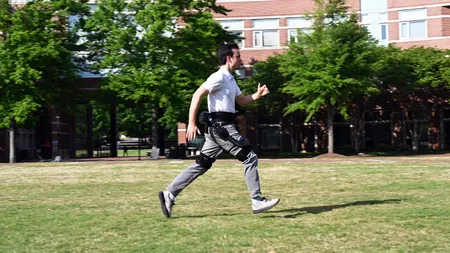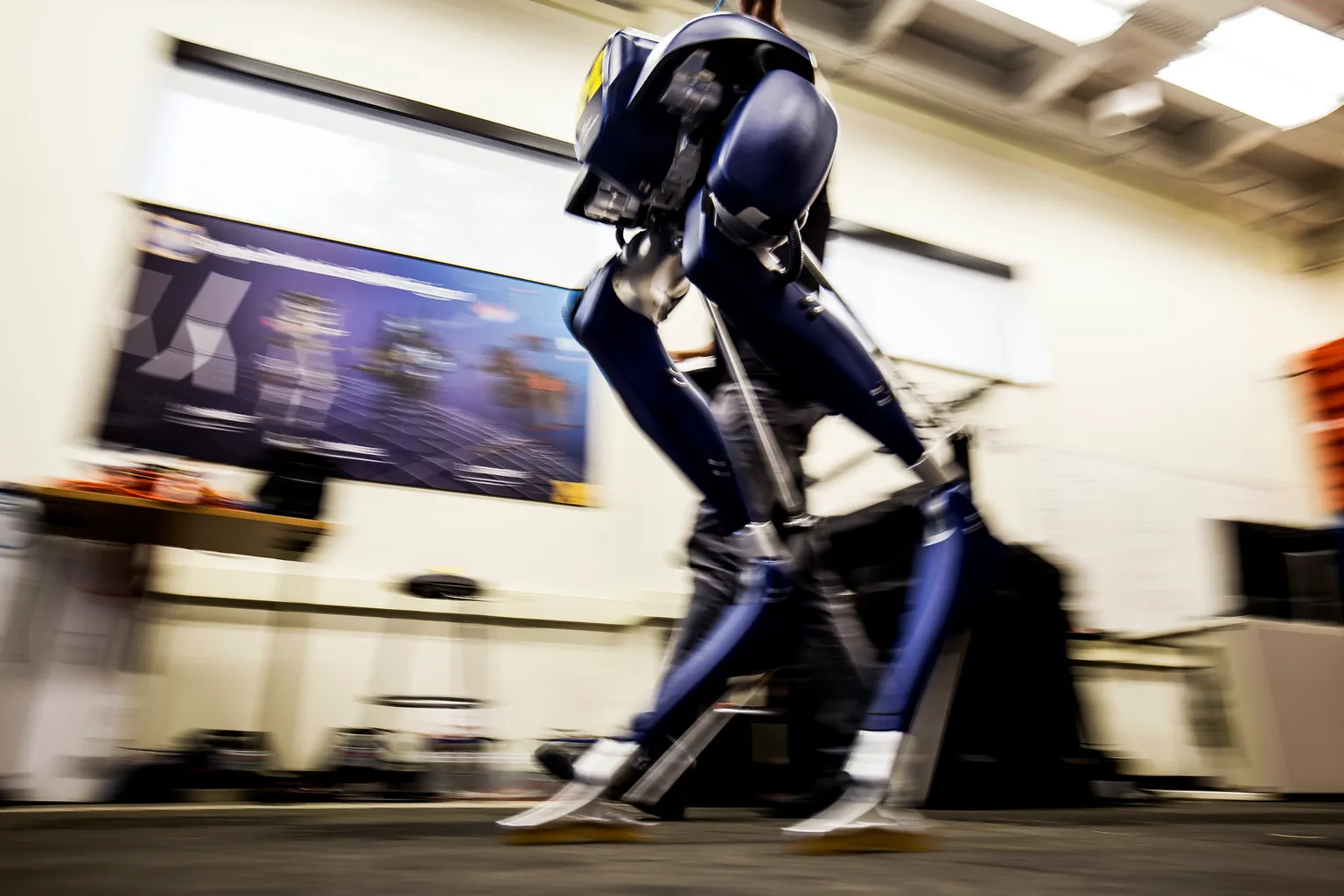
Why walk or run when you can roll or ride? On their own, legged robots can undertake challenges no other mobile robot can handle. This includes moving freely in challenging wilderness or hazardous environments for search and rescue operations. And as assistive devices for humans, legged robots can help enable everyday activities for people whose disabilities might otherwise limit their lifestyles.
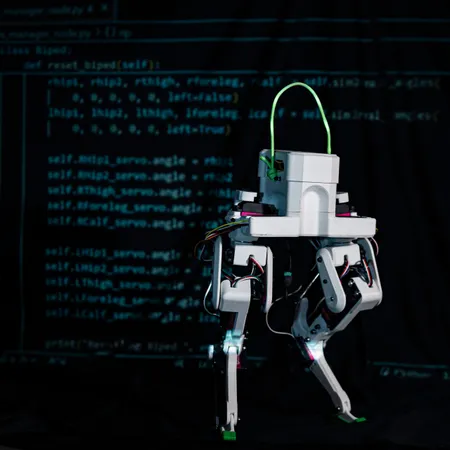
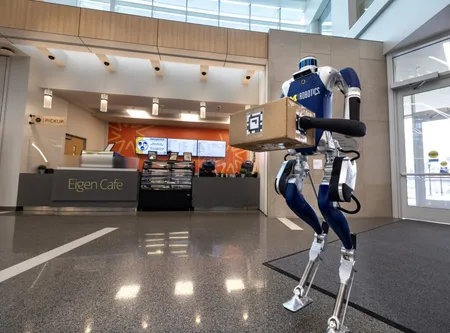
Michigan Robotics houses a world-renowned lab dedicated to legged robots, enabling them to navigate hazardous environments where other machines may fail, such as collapsed buildings or rough terrain. Researchers design smart algorithms that allow entire families of robots to walk on uncertain ground by adjusting their speed and balance based on the roughness of the terrain. This research is built on historical breakthroughs at U-M like MABEL, which in 2009 was the world’s fastest two-legged robot with knees, helping fuel the development of modern bipedal robots like Digit that move freely in three-dimensional space.
Challenges in this research include maintaining balance, grasping and moving with objects, and estimating terrain to ensure the traversability of an environment.
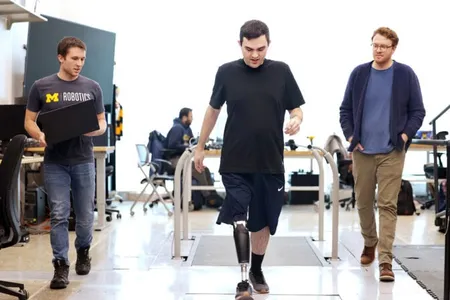
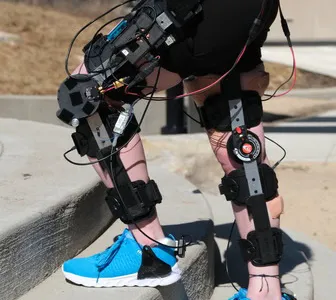
Beyond exploration, these same locomotion methods are adapted for rehabilitation robotics, including prosthetic limbs and exoskeletons like those from the company Wandercraft, which help people paralyzed from the waist down walk again without crutches.