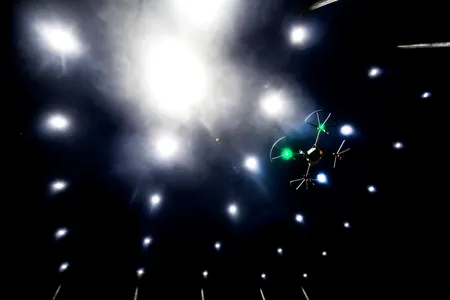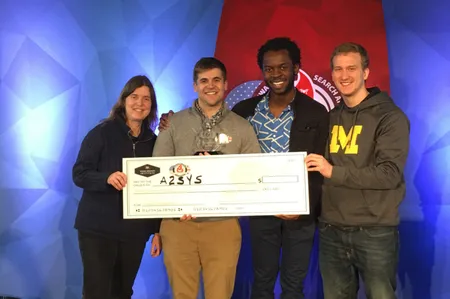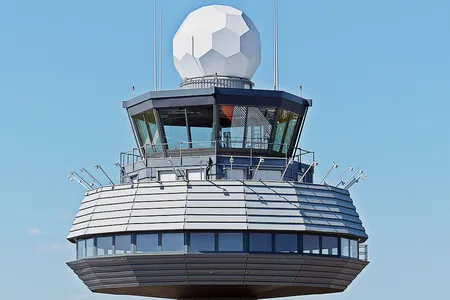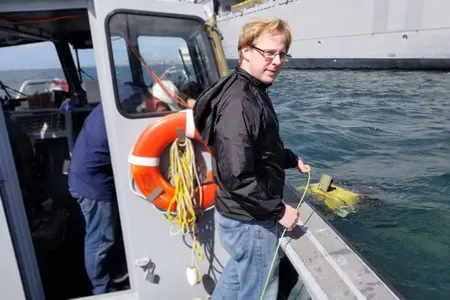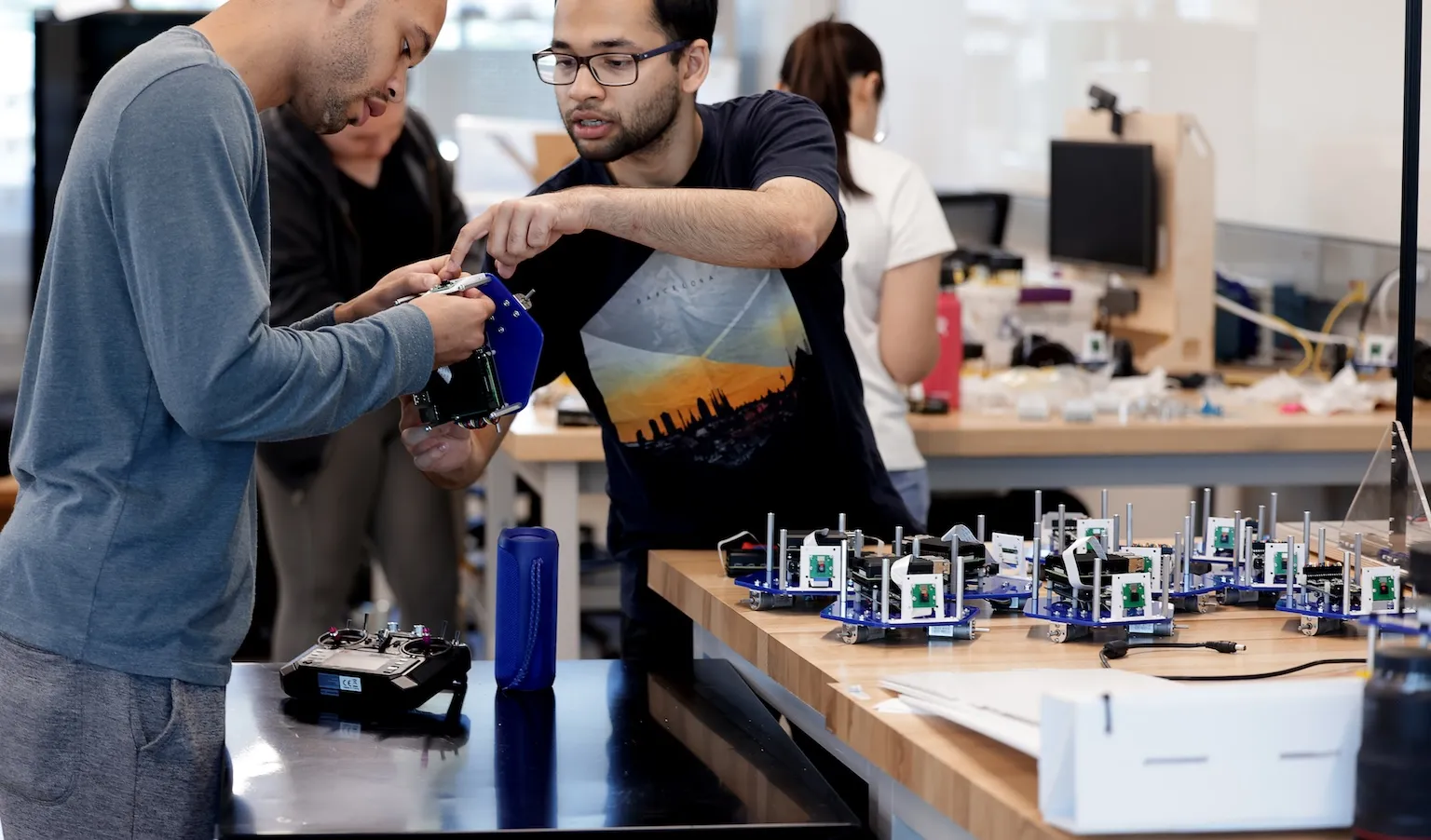
Research in multi-robot systems and swarms focuses on how groups of robots can work together to finish tasks faster and better than a single robot or person could alone. These teams are designed for diverse missions like search and rescue, aerial surveillance, and space exploration.
The core challenge here is distributed decision-making. While a single robot has one brain, a multi-robot team must coordinate each member’s actions. Michigan researchers design protocols where robots share their own information with neighbors, and the group converges on a collective solution. This work requires study of graph theory, distributed optimization, and game theory.
A major research topic is heterogeneous teaming, where robots with different capabilities, such as a team of ground vehicles, aerial drones, and underwater gliders, must collaborate on missions like search and rescue or environmental monitoring. Researchers develop task allocation algorithms that match a robot’s capabilities to a mission’s needs. They then create a scheduling framework to coordinate actions across the team, and communication methods that operate even if connectivity fails.
For autonomous teams, being able to scale is essential. Methods that may work for five robots often fail for 500 robots. Michigan faculty develop swarm algorithms inspired by biological collectives, like a flock of birds or school of fish, where simple rules produce sophisticated group behavior, even when lacking centralized control. These approaches enable applications like distributed sensing, where a swarm blankets an area to detect forest fires or map terrain.
Michigan is also a leader in adversarial resilience, developing herding strategies and resilient consensus algorithms to protect swarms against hostile opposition or compromised data. This ensures that even if one robot is attacked or sends bad information, the rest of the team can still finish the mission safely.
Since these robots often work alongside people, the research also explores human-robot collaboration. Michigan researchers study how humans and machines work together and trust one another to make sure humans and robot teams can understand each other’s intentions. For example, in manufacturing robotics, researchers develop robust task scheduling for robot teams where different types of robots work together to build complex products. Whether they are performing multi-robot map merging to create a shared view of a disaster zone or using herding to defend a stadium from unauthorized drones, these systems are built to be resilient and adaptive under the most uncertain conditions.