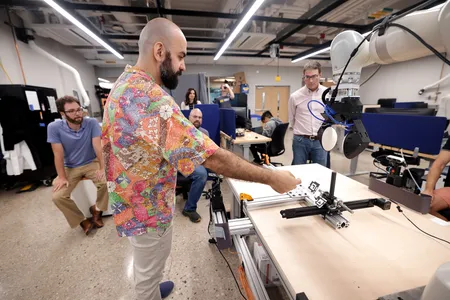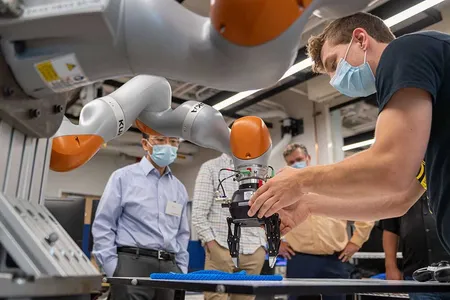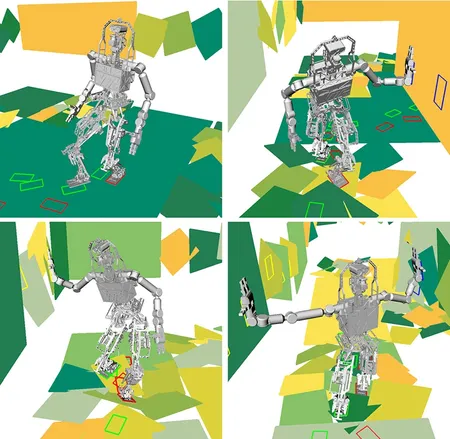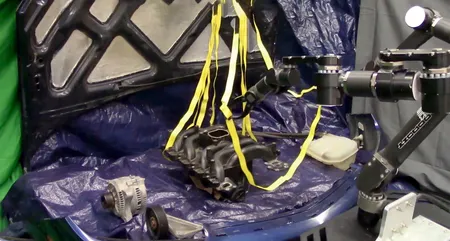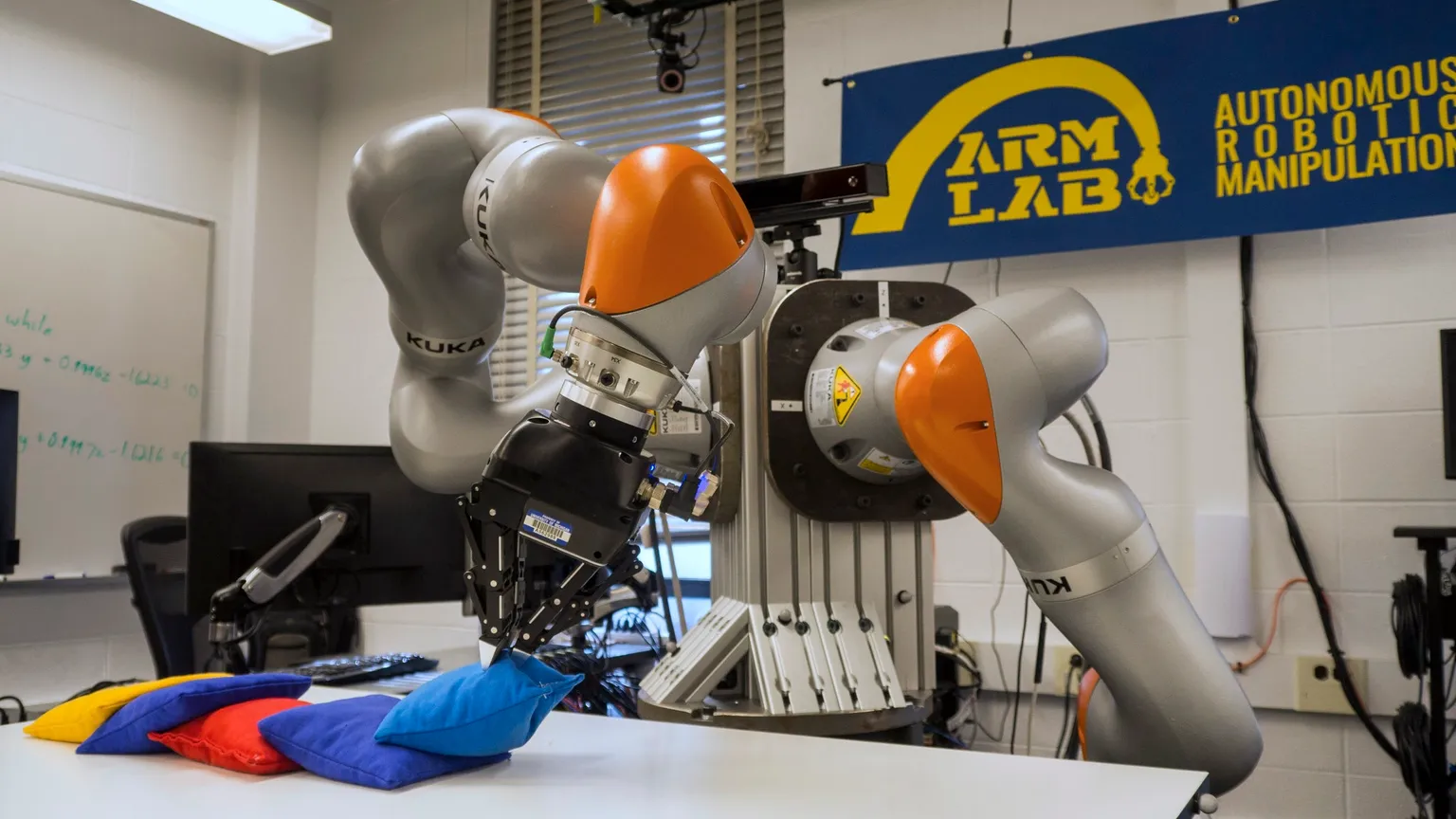
To accomplish a task, a robot often needs to interact with its environment. How a robot perceives its environment and how it physically interacts with objects is a major focus for researchers.
Michigan is developing mobile manipulators designed to operate reliably and autonomously in messy and dynamic environments, such as a home, office, or factory setting. This work could assist the elderly to maintain independence by performing household chores like tidying or folding laundry. These can be tougher tasks for a robot than expected, because flexible items like clothes, ropes, or fabrics change shape when handled. Michigan researchers specialize in the manipulation of deformable objects to help robots understand how to manage flexible materials.
Relatedly, specialized sensors that mimic a human’s sense of touch allow robots to determine an object’s shape and improve its ability to interact with objects.
To make these robots effective in homes, factories, and hospitals, faculty utilize learning from demonstration, a method where robots acquire new skills by imitating human movements. This training allows robots to master tool use, such as handling kitchen utensils or precise medical instruments, and to identify the best grasp for picking up complex items in crowded spaces.
Beyond the home, these advancements can be implemented in industrial settings through collaborative robotic assembly, where robots work safely alongside humans, and enhancing healthcare through surgical robotics for high-precision tasks like automated suturing.